The Latest

Here’s a look at the most interesting products from the past month, featuring releases from: 1Password, Bitdefender, Cequence Security, ConnectSecure, Cymulate, Cytracom, Datadog, Delinea, Edgescan, Enveedo, ESET, Index Engines, Island, iStorage, Lacework, NetApp, Netscout, Netskope, NinjaOne, Okta, Permit.io, PingSafe, Quantinuum, Seceon, and Zilla Security.

infosec products June 2023

Island integrates DLP capabilities for ChatGPT, Bard, and other AI

Island announced an enterprise-grade set of Data Loss Prevention (DLP) capabilities for all popular interactive AI-type applications including ChatGPT, Bard and others, within its Enterprise Browser. These features are available in multiple deployment modes to accommodate various interaction types; integrated into the browser itself, managing AI extensions; and as a standalone desktop application, delivering the industry’s broadest set of protections for this rapidly growing category of productivity products.

infosec products June 2023

Permit.io launches FoAz to give frontend developers the keys to security

Short for frontend-only authorization, FoAz is a technology that empowers frontend developers to use sensitive APIs directly from the frontend, without requiring any backend code, while maintaining the highest level of security.

infosec products June 2023

Bitdefender GravityZone Security for Mobile provides protection against mobile attack vectors

Leveraging Bitdefender’s antimalware and advanced threat intelligence solutions, GravityZone Security for Mobile enables organizations to vet applications, monitor device status, protect against malicious apps, phishing attacks and more to strengthen their overall cybersecurity posture.

infosec products June 2023

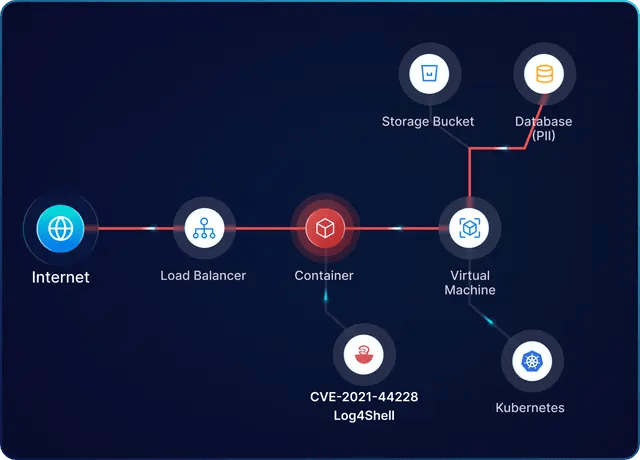
PingSafe helps organizations securely deploy containers with KSPM module

PingSafe launched KSPM module to provide an end-to-end security solution that encompasses the entire container lifecycle, from development to production, helping organizations securely navigate the dynamic landscape of container orchestration.
infosec products June 2023

ConnectSecure enhances its cybersecurity platform with deep attack surface scanning and EPSS

ConnectSecure is adding deep attack surface scanning and the Exploit Prediction Scoring System (EPSS) to its cybersecurity platform for MSPs that protect small and midsize businesses. The new capabilities will be fully integrated into the ConnectSecure platform, giving MSPs complete visibility into network, device, and application weaknesses that can be exploited by bad actors.

infosec products June 2023

CYTRACOM improves efficiency for MSPs with ControlOne platform updates

ControlOne enables MSPs to regain control over their customers’ networks. By eliminating the end user from the equation, MSPs can achieve secure networks and enforce compliance, eliminating vulnerabilities introduced by legacy VPN and on-premises firewalls

infosec products June 2023

Lacework simplifies cloud security with risk calculation on users’ permissions

Lacework announced new CIEM functionality to address the complex and growing challenges in managing identity threats and unnecessary risk within public cloud environments.

infosec products June 2023

Datadog Workflow Automation helps security teams investigate and resolve service disruptions

Datadog released Workflow Automation, a new product that enables teams to automate end-to-end remediation processes—with out-of-the-box actions and pre-built templates—across all systems, apps and services to help identify, investigate and resolve service disruptions and security threats.

infosec products June 2023

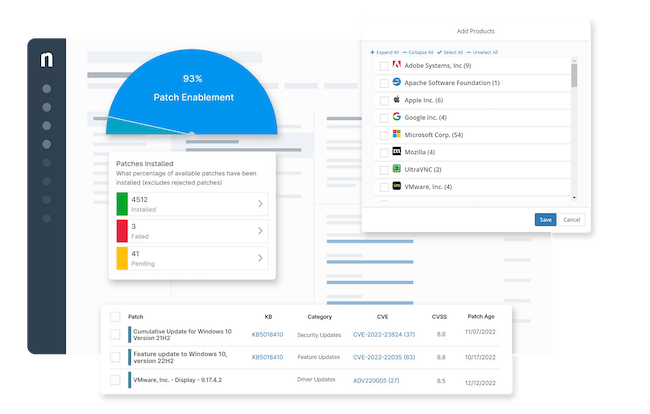
NinjaOne Patch Management enhancements mitigate security vulnerabilities

NinjaOne announced enhancements to NinjaOne Patch Management, delivering the latest automated patching solutions to maintain business operations and keep organizations secure. NinjaOne is simplifying the process with a new patching dashboard, automated Linux and MacOS patching improvements, and patch scheduling flexibility.
infosec products June 2023

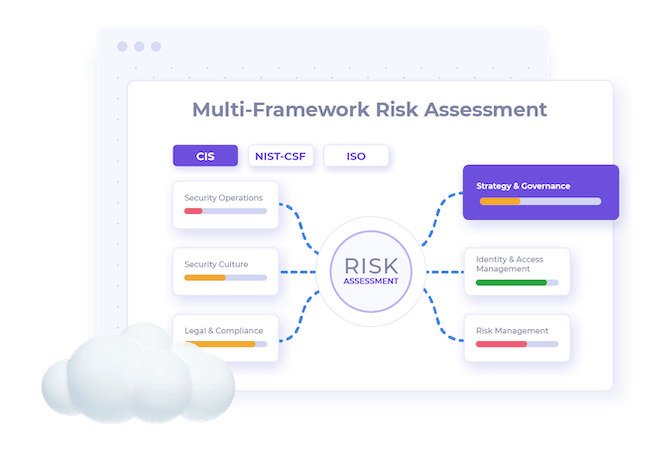
Enveedo Strategy Execution Platform for Security strengthens cyber resiliency for businesses

Enveedo has launched its Strategy Execution Platform for Security that enables organizations to build and maintain cyber resiliency. The platform includes a risk management engine, on-demand access to vCISO guidance, and a real-time centralized view of the organization’s systems, assets, stakeholders, and risks.
infosec products June 2023

1Password introduces two new passkey features to promote passwordless future

Save and sign in with passkeys enables users to create and store passkeys in their 1Password vault, and sign in to their accounts with them through the 1Password beta browser extension. Unlock 1Password with a passkey allows customers to create a new, free 1Password account to preview the passkey login functionality, replacing the need for an account password and secret key combination.

infosec products June 2023

Okta Device Access enables businesses to secure access to both devices and applications

As part of Okta’s Workforce Identity Cloud, Okta Device Access delivers stronger authentication to unlock a device, helping organizations achieve zero trust while simplifying the login experience for employees.

infosec products June 2023

Zilla Security introduces new suite of identity security SaaS solutions

Zilla Security announced Zilla Secure and Segregation of Duties (SOD), two SaaS solutions that enable enterprise-wide identity security for cloud-based applications and infrastructure, SaaS, and legacy applications.

infosec products June 2023

Seceon unveils two products for MSPs and MSSPs to quantify risk

Seceon announced two new products designed to quantify and report on the value of the platform for its partners and their clients. Seceon aiSecurity Score360 service provides comprehensive scanning and risk assessments of attack surfaces, and Seceon aiSecurity BI360 enables partners to select from pre-set compliance and regulatory frameworks, including CMMC, HIPAA, PCI-DSS, NIST, GDPR and perform their own analytics and reporting.

infosec products June 2023

Quantum Origin Onboard strengthens device security against cyberattacks

Quantinuum launched Quantum Origin Onboard, an innovation in cryptographic key generation that provides quantum computing hardened cyber protection for a wide range of connected devices by maximizing the strength of keys generated within the devices themselves.

infosec products June 2023

NETSCOUT introduces Visibility Without Borders platform

NETSCOUT has introduced its Visibility Without Borders platform to help organizations keep goods and services flowing by uniting performance, security, and availability under one common data framework.

infosec products June 2023

iStorage launches datAshur PRO+C with Type-C USB interface

iStorage’s new datAshur PRO+C is a user-friendly USB 3.2 (Gen 1) Type-C flash drive. It employs PIN protection and hardware encryption to safeguard data to military-grade standards. Available in various capacities ranging from 32GB to 512GB, this device is also offered with a USB Type-C to Type-A adapter to ensure users are able to keep pace with the evolving USB interfaces.

infosec products June 2023

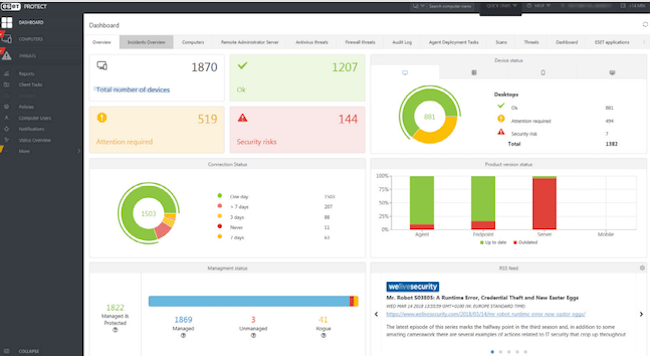
ESET PROTECT Elite defends users against ransomware and zero-day threats

ESET PROTECT Elite delivers enterprises, SMBs, and channel partners with enterprise-grade XDR for increased visibility and threat-hunting capabilities. The comprehensive offering combines multilayered endpoint protection with multi-factor authentication, server security, advanced threat defense, full disk encryption, mail security and cloud application protection.
infosec products June 2023

Cymulate Exposure Analytics provides users with an attacker’s view of their cyber resilience

Rather than simply prioritizing based on CVSS scores, Cymulate Exposure Analytics provides a security data fabric for contextualized vulnerability prioritization, which correlates vulnerability findings with business context and security control effectiveness.

infosec products June 2023

Edgescan EASM allows organizations to secure their critical assets and applications

The Edgescan EASM solution solves the lack of visibility and slow remediation response challenges presented by legacy tools and manual processes. Integrated with Edgescan Penetration Testing as a Service (PTaaS) and Risk-based Vulnerability Management (RBVM) capabilities, EASM provides complete visibility and assessment across multi-cloud and on-premises infrastructures.

infosec products June 2023

Netskope Intelligent SSE helps enterprises securely manage employee use of generative AI apps

Netskope has released a comprehensive data protection solution to help enterprises securely manage employee use of ChatGPT and other generative AI applications, such as Google Bard and Jasper. As part of its Intelligent Security Service Edge (SSE) platform, Netskope enables safe usage of generative AI thanks to patented data protection techniques.

infosec products June 2023

Delinea Privilege Manager enhancements reduce phishing effectiveness

Based on Delinea’s deep expertise and customer feedback, the new Workstation Policy Framework includes five of the most common policies to help customers quickly build a foundation for privileged access controls and create a baseline of security on Windows and Mac workstations without disrupting user productivity.

infosec products June 2023

Index Engines CyberSense 8.3 identifies malicious changes indicative of cyberattack

Index Engines announced CyberSense 8.3, which features several user experience updates highlighted by additional metrics after a ransomware attack is detected, a new setup wizard and system configuration interface.

infosec products June 2023

NetApp BlueXP updates simplify backup and recovery

The new capabilities available through BlueXP deliver data service capabilities that can discover, manage, and protect data across the multicloud infrastructure, leveraging AI/ML operations for optimum business results.

infosec products June 2023

Cequence Security strengthens API protection platform with generative AI and no-code security automation

Cequence Security announced new updates to the Unified API Protection (UAP) platform that strengthen customers’ ability to discover, manage risk and protect APIs. With the latest capabilities, organizations can deploy API Security Testing with built-in generative AI automation, protect users from online fraud and operationalize security findings with low-code/no-code workflows.

infosec products June 2023


from Help Net Security https://ift.tt/KNJC3Lm

Even people who love going to the beach have to admit that dealing with the sand that inevitably ends up in your shoes, towels, bags, hair, and eventually, home, is a pain.

That’s why over the years, Lifehacker posts have featured strategies for making cleaning up after a day at the beach a bit easier. These have included classics like bringing baby powder, a mesh bag, and an extra towel, as well as favorites like the fitted sheet trick.

While those are certainly a start, we’re back with even more tips to minimize the amount of sand that sticks to you and your stuff. Here are a few to consider for your next trip to the beach.

Why does sand stick to everything?

Before getting into the tips, let’s start with some science.

Ultimately, it comes down to moisture. As Dan Seitz explained in a 2018 article in Popular Science, water molecules can attach directly to the grains of sand, and additional water molecules can stick to those water molecules, and so on. That means that beach sand will latch onto anything wet—including from sweat—and the drier you’re able to keep your stuff, the better.

How to stop sand from coming home with you

Now, let’s put that sand science to use with these four strategies, which also come from Seitz’s 2018 article:

Use fabric softener on your beach towels

You can’t fully sand-proof a towel, but washing it with fabric softener will help it repel water.

Invest in some hydrophobic spray

Before heading to the beach, pretreat the bottoms of your shoes (ideally, flip flops or other open-toed shoes that allow you to quickly empty them of sand), cooler, chairs, bags, and any other items with a nontoxic water-repelling spray.

Avoid metal drink containers

Pull a can of soda, seltzer, or beer out of a cooler on a hot day, and it’s going to sweat, and may then get coated in sand. Prevent that from happening by putting the can in a foam koozie, or pouring it into a plastic cup. Similarly, bring water or other beverages in plastic or double-walled bottles.

Exit the water when the tide is coming in

If you opt to go in the water, and happen to be in a body of water with waves, get out when the tide is heading in. “When the tide pulls out, it draws loose particles of sand with it, which could stick to you,” Seitz explains.


from Lifehacker https://ift.tt/WVebF9U
Photo: Fabio Principe (Shutterstock)

The Black Friday of the summer—aka Prime Day—is quickly approaching. This year it falls on Tuesday, July 11th and Wednesday, July 12th. If you plan to shop the “two days of epic deals” (Amazon’s words), you may want to take advantage of one or more of the following opportunities to get credit to spend during the annual sales event. Here’s what to know.

How to get Amazon credit to spend on Prime Day

According to MarketWatch, there are four ways current Prime members can earn Amazon credit towards their Prime Day purchases:

  1. Buy a new Amazon gift card for at least $50 between July 3-10 to get $5 Prime Day credit.
  2. Add at least $100 to an existing Amazon gift card from now through July 10 to get $12 Prime Day credit.
  3. Upload your first photo to the Amazon Photo Center before July 7 to get $15 credit.
  4. Apply for the Amazon Prime Visa Credit Card between now and July 26 and get a $200 Amazon gift card instantly upon approval.

How to shop Prime Day sales if you don’t have a Prime membership

As was the case in previous years, you must have a Prime membership—or at least access to someone else’s—in order to take advantage of Prime Day deals and discounts.

If you’re not a member, and don’t want to invest in the $139 annual fee, you can sign up for a free 30-day trial membership—as long as you’ve never had one (either paid or a free trial) before. Just be sure to set a calendar reminder to cancel it; otherwise you’ll be charged $14.99/month (plus tax) until you get around to it.

Want to learn more about the deals and discounts? Keep an eye on Lifehacker’s Amazon Prime Day coverage.


from Lifehacker https://ift.tt/AYQg1w4

Inflation continues to impact a range of everyday expenses, including the cost of sending mail. Beginning next week, the price of a Forever stamp, as well as other types of postage, is set to increase, according to the United States Postal Service (USPS). Fortunately, there’s still time to stock up on stamps at their current prices. Here’s what to know.

How much does a Forever stamp cost?

Currently, a Forever stamp costs 63 cents. But it won’t stay that way for long: On July 9, 2023, the price will increase by approximately 5.4%, to 66 cents, the USPS announced earlier this year.

While 3 cents may not seem like much, in this economy, every little bit counts—especially if you tend to go through a lot of stamps. For this reason, you may want to replenish your supply on or before Saturday, July 8, as they’ll continue to be valid even after the price increase.

That’s the beauty of Forever stamps: As the name suggests, they can be used to mail a one-ounce letter “regardless of when the stamps are purchased or used, and no matter how prices may change in the future,” according to the USPS.

This is the second time this year that the price of Forever stamps has gone up: On January 22, 2023, they went from 60 cents to 63 cents each. According to the USPS, both increases were “to offset the rise in inflation.”

Additional postage cost increases

Along with the Forever stamp, other types of postage will also increase in price on July 9. The cost of sending a domestic postcard will go from 48 cents to 51 cents, while the cost of sending an international letter (1 oz.) or postcard will go from $1.45 to $1.50.

Even with these increases, the USPS notes that its prices “remain among the most affordable in the world.”


from Lifehacker https://ift.tt/FeOcPqQ

Week in review

Here’s an overview of some of last week’s most interesting news, articles, interviews and videos:

Unlocking internet’s secrets via monitoring, data collection, and analysis
In this Help Net Security interview, Ryan Woodley, CEO of Netcraft, discusses the importance of monitoring, collecting, and analyzing internet data to gain a profound understanding of the internet.

Preparing health systems for cyber risks and insurance coverage
In this Help Net Security interview, Dennis Fridrich, VP of Cybersecurity at TRIMEDX, delves into the hidden costs of cyberattacks on health systems, the role of insurers in promoting cybersecurity preparedness, and how organizations can better manage their cyber risk.

Exploring the persistent threat of cyberattacks on healthcare
In this Help Net Security interview, Brett Harris, Cybersecurity Officer for the Americas at Siemens Healthineers, discusses the long-term impacts of cyberattacks on healthcare institutions and what healthcare providers can do to protect patients’ personal data and medical devices.

PoC for Arcserve UDP authentication bypass flaw published (CVE-2023-26258)
An authentication bypass vulnerability (CVE-2023-26258) in the Arcserve Unified Data Protection (UDP) enterprise data protection solution can be exploited to compromise admin accounts and take over vulnerable instances, MDSec researchers Juan Manuel Fernández and Sean Doherty have found – and have released a PoC exploit for it.

8Base ransomware group leaks data of 67 victim organizations
Lockbit 3.0 is currently the most active ransomware group, NCC Group says in its most recent Threat Pulse report, but new ransomware groups like 8Base and Akira are rising in prominence.

MOVEit compromise affects pension systems, insurers
The compromise of PBI Research and The Berwyn Group’s MOVEit installation has resulted in the theft of data belonging to several pension systems and insurance companies – and millions of their users.

5 free online cybersecurity courses you should check out
5 free online cybersecurity courses you should check out: Cryptography, Networks and Communications Security, Security Awareness Training, Security Operations and Administration, and Systems and Application Security.

How hardening Microsoft 365 tenants mitigates potential cloud attacks
In this Help Net Security video, Aaron Turner, IANS Faculty and SaaS CTO at Vectra AI, discusses how hardening Microsoft 365 tenants can reduce the chances of a disastrous cloud attack.

Widespread BEC attacks threaten European organizations
European organizations experienced a greater volume and frequency of BEC attacks over the last year, as compared to organizations in the United States, according to Abnormal Security.

A deep-dive demo of NetSPI’s Attack Surface Management (ASM) platform
Learn how NetSPI’s always-on solution allows companies to improve visibility, inventory, and understanding of known and unknown assets and exposures on their global attack surface and distill signal from noise.

95% fear inadequate cloud security detection and response
Although numerous respondents acknowledged employing risky practices and behaviors within their cloud environments, they strongly believe in the effectiveness of their security tools and processes to safeguard their organizations against meticulously planned attacks, according to Permiso.

How cyber insurance empowers CISOs
In this Help Net Security video, Fawaz Rasheed, Field CISO at VMware, discusses how cyber insurance remains the high tide that rises ships.

Uncovering attacker tactics through cloud honeypots
Attackers typically find exposed “secrets” – pieces of sensitive information that allow access to an enterprise cloud environment — in as little as two minutes and, in many cases, begin exploiting them almost instantly, highlighting the urgent need for comprehensive cloud security, according to Orca Security.

The magic formula for big data companies to outshine the competition
In this Help Net Security video, Shane Shook, Venture Partner at Forgepoint Capital, believes it takes more than just cutting-edge technology to rise above the noise and discusses the magic formula for data companies to conquer the competition.

Global rise in DDoS attacks threatens digital infrastructure
In 2022, the total number of DDoS attacks worldwide increased by 115.1% over the amount observed in 2021, according to Nexusguard.

Micropatches: What they are and how they work
In this Help Net Security video, Mitja Kolsek, CEO at Acros Security, discusses micropatches, a solution to a huge security problem.

Popular generative AI projects pose serious security threat
Many popular generative AI projects are an increased security threat and open-source projects that utilize insecure generative AI and LLMs also have poor security posture, resulting in an environment with substantial risk for organizations, according to Rezilion.

Guide: Attack Surface Management (ASM)
ASM complements pentesting because it brings an always-on approach to discovering attack surface exposures, validating the impact, and prioritizing updates.

New infosec products of the week: June 30, 2023
Here’s a look at the most interesting products from the past week, featuring releases from Cequence Security, Delinea, Index Engines, and NetApp.


from Help Net Security https://ift.tt/5uF7Rz2
Photo: 220 Selfmade studio (Shutterstock)

As we’ve learned over the last few weeks, wildfire smoke is no longer a problem primarily confined to the west coast, and is also likely to be a regular occurrence in the rest of the country moving forward.

Given that the smoke can impact indoor air quality, interest in and sales of air purifiers has spiked since the first round of smoke hit the east coast earlier this month. And when it comes to getting the most out of yours, where you place it in your home matters. Here are some examples of the best and worst places to put an air purifier.

The best places to put an air purifier

Some of the best places in your home for your air purifier include:

  • A relatively clear area: There shouldn’t be anything touching the top, back, or sides of an air purifier. Ideally, it should have at least 6 inches of clearance on each side.
  • At entry points: Contaminants can get in and flow through places like doorways, hallways, and windows.
  • Near (but not touching) the source of contaminants or allergens: For example, the kitchen stove, a pet’s bed, or an area prone to accumulating dust.
  • Rooms where you spend a lot of time: Bedrooms, the living room, the office, etc.
  • In the center of open-concept homes: That is, if you’re using one large air purifier for an entire floor.
  • In individual rooms of other types of homes: If a home isn’t open-concept, opt for smaller models for bedrooms and other spaces, placed toward one side of the room (but not touching anything).

The worst places to put an air purifier

Don’t put an air purifier anywhere with the potential of blocking the air intake, including:

  • Directly up against a wall
  • On a shelf
  • In a corner
  • Behind or under furniture

Other places to avoid include:

Lastly, if you’re going to invest in an air purifier—or build one yourself—make sure it has a HEPA filter and a MERV rating of at least 13.


from Lifehacker https://ift.tt/VF2fipD